



Deep Dive 5 Ways to Identify "High-Quality Solid Wood" How to Choose a Masterpiece
Selecting wood isn't just about finding a color you like; it’s about spotting the "quality" hidden within the fibers. High-quality solid wood is a lifetime investment. Here is how to identify the best.
1. Unique Grain Patterns (Natural Pattern & Flow)
How to check: Scan the surface with your eyes. Authentic wood will have a diverse range of Grains that never repeat, not even slightly.
What to look for: In synthetic or laminate wood, you will notice a Repeating Pattern at regular intervals. In true masterpiece-grade wood, the grain flows naturally and uniquely across every inch.
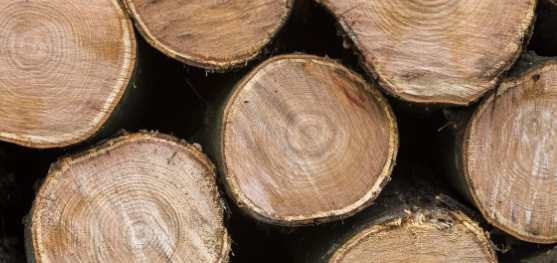
2. The End Grain (Growth Rings)
How to check: Look at the cross-section or the edge of the wood plank (End Grain). You should see the Growth Rings—curved lines or patterns that reveal the tree's age.
What to look for: High-quality solid wood features clear, dense growth rings, indicating a mature tree with high structural strength. If the cross-section is perfectly smooth without any pattern, or if you see layers of different materials sandwiched together, it is likely a veneer or engineered wood.
3. Density and Substantial Weight
How to check: If the size allows, try to lift or handle the wood. Solid wood provides a sense of "density" and a weight that is well-balanced with its dimensions.
What to look for: Real wood does not sound hollow or "thin" when tapped with your knuckles. It should produce a solid, dull thud, which signals its ability to withstand heavy loads and long-term use.
4. Thermal Touch (Natural Temperature)
How to check: Place your palm on the wood surface for a moment. Authentic wood has low thermal conductivity.
What to look for: In an air-conditioned room, solid wood will not feel freezing cold like plastic, stone, or glass. Instead, it offers a soft, warm touch that adjusts to human body temperature. This "living" quality is why wood floors make a house feel more like a "home" than any other material.